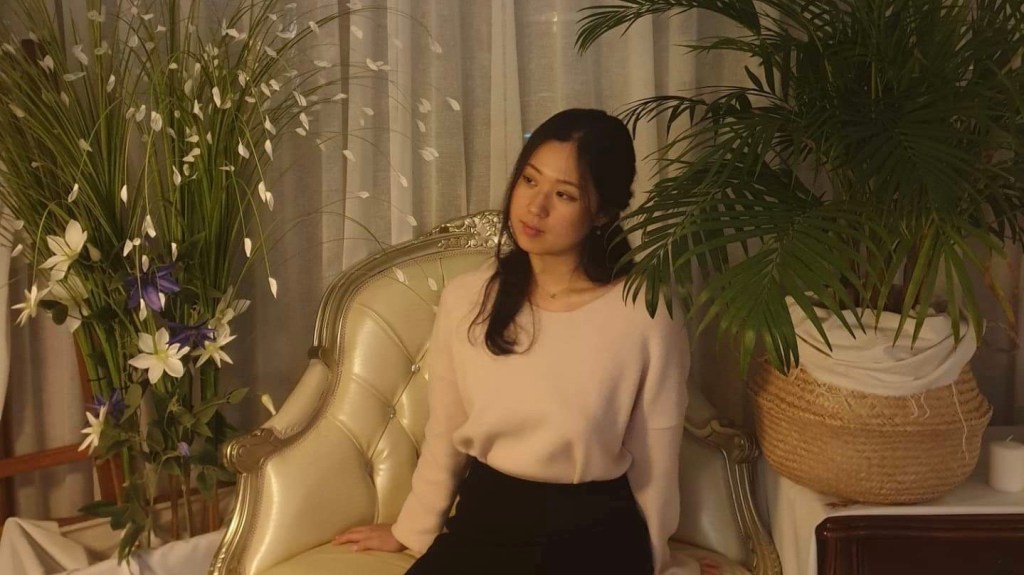
“Living in an entirely different culture really opens your eyes.”
Sia is a third–year Medical Science student at USYD. She was born and raised in Korea. (Head to the Gallery to meet her!)
Alison: Please introduce yourself.
Sia: Hi, my name is Sia. I’m from Korea and I moved to Sydney a few years ago. I’m currently studying medical science in USYD. I love eating good food, having quality convos, exercising, and reading books at cafes while eating croissants.
Alison: Ooh, how Parisian.
We have a few topics to cover today. Let’s begin with your experience growing up in Korea. What was it like?
Sia: I only stayed there until middle school. Most of my days were doing academic work and I don’t really remember having a life outside of school. After school, I would go straight to piano lessons, violin lessons, study English, math, science, sometimes Chinese as well. I never got along with that kind of academic life because I hated “having” to study. I can motivate myself to study pretty well but I hated being forced to do something. After primary school it was always studying and we had to come to school to study during the breaks as well. Essentially, we didn’t really have a “vacation”. I remember trying so hard to get out of it.
Occasionally during the weekends I would go out to the city with my friends and that would be an entirely different life. Korea is so vibrant 24/7. Cafes are open till late, karaokes are everywhere, new “trendy” places pop up everywhere.
There’s always something new to look forward to in Korea. I remember Korean makeup really starting to take off and all of my friends started putting on super red lip tint and wear big coloured contacts. It looks a bit scary now but that used to be the prettiest look.
I thought those girls were so pretty but teachers would label them as “bad kids” and since I cared about my academic transcript (in Korea, teachers put in their observations of the student), I didn’t want to look bad to the teachers. We had a very strict dress code, so I had to get a skirt that was knee-length but since I was tall for a middle school girl it was always too large for my waist. I cringe whenever I think about how I might have possibly looked like. But teachers and the seniors would stand at the school entrance looking super scary, and they would call you out if your skirt was too short, hair was too long, etc. Because the school was so uptight, everyone had their own ways to go around the rules, and I did too. Those were the fun parts.
Alison: This is interesting. School life in Korea seems hectic, stringent, but also delightful.
What was the best thing about Korea?
Sia: I think the best thing about Korea was the food. After school I would go get seasonal street food with my friends. Those were the foods that you can eat only during either summer or winter, and you’ll have to wait an entire year to eat it again. Every season has some sort of food to look forward to. Also the aunties and uncles selling street food would sometimes remember your face and give you extra stuff. I didn’t buy a lot at once but I went nearly every day so they loved me. Sometimes I miss that warmth. Like I said, school was really hectic, but buying food on my way back home somehow made everything worth it.
Alison: Gotta love the little things.
I know that in Korea, many aspire to become a K-pop idol. What is your view on this?
Sia: I find it surprising that so many people want to become one, but I can also see why. Many people you see on TV are insanely attractive, rich, and famous. But most people don’t see the trainees who don’t get to debut, nor do they experience living without privacy. Personally, I don’t think it’s worth the stress that comes with being a K-pop idol.
I guess for some people, the K-pop industry seems good enough to mask all of the downsides. I know a few Aussie acquaintances who went auditioning at K-pop agencies. I support them but if they are someone close to me I kind of hope that they will think again. It’s easier to say “follow your dreams” when you don’t really know them. Someone close to me was actually planning to audition for an agency and I was so worried for them. I still wish them all the best, and hope if they do make it, that they don’t take things hard.
Since I enjoy being a private person, I don’t think I can handle that lifestyle.
Alison: What you said is so true. We only get to see the fame and glamour of the idols that constitute merely the tip of the iceberg. There’s a lot more to it that we don’t know, perhaps even something that we don’t want to know.
The last part of the interview is about your journey studying abroad. What are some of the benefits and costs?
Sia: For college, I wanted to go somewhere that I can settle in. Sydney seemed like the perfect place with its healthcare system, beaches, clean food, air, etc. That’s basically why I chose USYD.
I think the main concern for studying abroad is the financial aspect and the visa. But if you put that aside (which is hard because it is a huge part), it’s a great opportunity for anyone. Living in an entirely different culture really opens your eyes.
Alison: You mentioned that you study medical science. Would you say it’s a source of empowerment to you?
Sia: MedSci allows you to become more health-conscious. Like what we talked about before with Isabella, I agree with you that knowledge is power. I think it’s one of the best assets you can have after health. So having knowledge of health is doubling the empowerment for me.
But it gets stressful sometimes, especially when I feel like there are no options other than getting into med. It’s not true, of course, but getting into medicine was a significant deciding factor to study medical science in the first place, at least for most of my friends in this degree. Even for me, becoming a doctor is my dream and I never considered other career paths. When I get an unsatisfactory mark, I often worry about what I can do if I don’t get into medicine.
Alison: That sounds tough. How are you planning to overcome this challenge?
Sia: So last year, I decided to separate my “goal job”‘ from my “dream job”. Becoming a doctor is my goal but my dream is to have the knowledge and power to help people live a better life.
Separating my dream and goal allowed me to set a goal without the fear of failure. Even if I fail to achieve it, I’ll still be able to pursue my dream, as opposed to having “becoming a doctor” as my dream and not knowing what to do if I don’t get into med school. As long as I keep the goal and dream separated, I won’t be so lost even if I have to take a different path.
Alison: Best of luck, Sia, and thank you!


